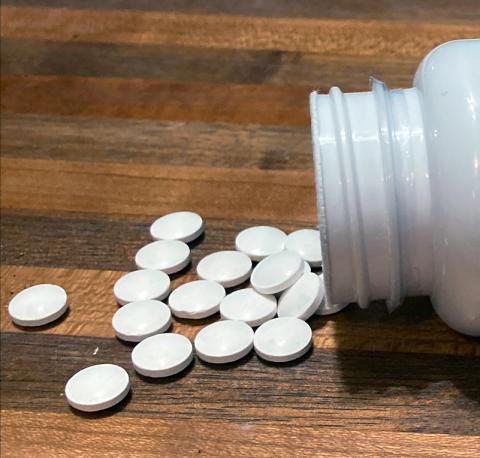
Melatonin use in young children is growing despite a lack of knowledge about its efficacy and long-term effects
A team from the United States has analyzed nearly twenty studies on melatonin use in children between the ages of 0 and 6 in different countries. Although it appears that melatonin can help improve sleep onset in children with neurological conditions such as autism spectrum disorders, the data indicate that in recent years there has been an increase in sales of these products without a clear understanding of their actual effectiveness and potential long-term consequences for typically developing young children. The results are published in JAMA Network Open.
Garjón - Melatonina niños
Javier Garjón Parra
Head of the Medicines Advisory and Information Service in the Pharmacy and Benefits Sub-Directorate
Melatonin is a hormone in the body that regulates sleep-wake cycles. It is the active ingredient in Slenyto®, a prescription medication indicated for insomnia in children and adolescents aged 2 to 18 years with autism spectrum disorder and/or neurogenetic disorders, and aged 6 to 17 years with attention deficit hyperactivity disorder, provided that sleep hygiene measures have been insufficient. Data are available for up to two years of treatment. The physician should periodically evaluate its effect and consider discontinuing it. As it is considered a safe substance, in the European Union, it can also be marketed as a food supplement and sold without a prescription.
Since melatonin is the leading cause of emergency room visits for overdose in young children (0 to 6 years) in the USA, the authors undertook a systematic review of its long-term effects (both positive and negative) in this age group. To this end, they searched for interventional and observational studies, as well as database registries.
One criticism that can be made of this article is a certain inconsistency. Its objectives are health outcomes, but its first conclusion concerns the increase in prescriptions. It doesn't define what it considers long-term and presents results from 2-14 weeks. The review finds hardly any information beyond that of clinical trials for the approved indications.
The recommendations are reasonable, but stem more from the scarcity of available information than from the review's findings: limiting the use of melatonin in young children to approved indications and always after trying non-pharmacological measures, the need for adequate supervision, and that it would be better to position melatonin as a medication rather than a supplement.
Egea - Melatonina niños
Carlos Javier Egea Santaolalla
President of the Spanish Federation of Sleep Medicine Societies, coordinator of the Sleep Alliance Health Group, head of the Pulmonology Service and the Functional Sleep Unit of the Bioaraba Health Research Institute, coordinator of the SEPAR 2025-2026 year of sleep disorders and associate professor at the Faculty of Medicine of the University of the Basque Country
This is a systematic review of all published articles with scientific validity on the use of melatonin in children under 7 years of age, in any of its forms. It is a serious, well-structured article that answers the questions posed by the authors. We can draw several conclusions:
- It reveals that the use of melatonin in young children has been increasing steadily over the last decade, almost exponentially, multiplying its use fivefold since 2009 and especially after COVID-19. In fact, it is the substance most frequently used by parents without medical supervision, and even in cases of drug overdose, in children under 5 years of age. Most treatments have no side effects, although some deaths have been reported. In the USA, 90.2% of pediatric melatonin ingestions were accidental, suggesting that young children may be consuming their parents' melatonin. This review contributes to the evidence that there could be a clear public health problem regarding the increase in unsafe melatonin use in young children and its continued use beyond clinical recommendations.
- However, the studies considered to be of good quality in the review convey a clear message: that melatonin improves sleep onset in children with neurological conditions, such as autism spectrum disorder, but these effects are not clear in typically developing children. The clinical studies described indicate the safety of melatonin for children with neurological disorders similar to autism spectrum disorder (ASD), even with prolonged treatments of one to two years.
- Our only criticism is that the article includes observational studies from different countries with different national health systems and, therefore, different methods of obtaining melatonin. This means that the results obtained in healthy children in this review, where it appears to have no benefit, may not be representative of real-world situations.
These findings support the clinical practice of recommending melatonin for young children with ASD after, and always after, evaluating behavioral interventions, always under medical supervision. However, the report adds that there is no evidence to support this treatment practice in children without neurological disorders.
This necessitates improved support from pediatricians and parents for behavioral sleep practices, such as reducing screen time at night, establishing structured bedtime routines, etc.
Furthermore, given the increase in treatments and overdoses in countries without drug regulation, such as ours, we are encouraged to authorize melatonin as a prescription medication. This could improve usage estimates, medical supervision, and formulation accuracy. Secondly, it is necessary to develop treatment discontinuation strategies that allow for the safe reduction of melatonin use while promoting healthy sleep habits, in order to meet the recommendations for typically developing children.
Larrosa - Melatonina niños
Óscar Larrosa
Clinical neurophysiologist, expert in sleep medicine and clinical care manager of the Sleep Medicine Unit at MIP Salud-Personalised Comprehensive Medicine
Overall, it's an impeccable review of the evidence and the state of the art, of high quality, in my opinion.
It points out what was already suspected or known: in young children, melatonin is increasingly used as a quick fix for insomnia without studying the underlying problem, despite insufficient evidence of its overall usefulness, especially in the long term. And its potential long-term repercussions are not sufficiently documented.
The problem, as well pointed out, may lie in the over-the-counter sale of melatonin in many countries, which facilitates its use as a magic bullet and easy remedy (perhaps for parents), which is not advisable in biology and medicine if the causes in normally developing children are not studied. Its efficacy and usefulness are validated in longer-term neurodevelopmental problems, but this is not applicable to children with insomnia who are developing normally. Its use only seems reasonable in certain cases, for short-term, early-stage insomnia and at relatively low doses, as a precaution and because much about this neuroendocrine hormone remains unknown.
I don't see any major limitations in the article, but rather many strengths.
Cristóbal Coronel - melatonina niños EN
Cristóbal Coronel Rodríguez
President of the Spanish Society of Outpatient Paediatrics and Primary Care (SEPEAP), paediatrician with the Andalusian Health Service and associate professor of Paediatrics at the University of Seville
What do you think of the article overall? Is it of good quality?
‘Yes, I think it's good enough to be published.’
How does it fit in with existing evidence and what implications could it have?
"Awareness of the rational use of melatonin.
Most of the published studies and evidence on groups of children affected by certain pathologies are generally older, and these conclusions cannot be exported and applied to infants or young children or those without underlying neurological or psychological pathologies.
Melatonin has been shown to be effective in improving sleep in children with problems (blindness, autism, attention deficit hyperactivity disorder and neurodevelopmental disorders) in medium- and long-term studies, while its recommendation for insomnia and circadian rhythm disorders in children and adolescents with normal neurological development is based on studies that are less extensive in terms of number of participants and treatment time.
There is still a lack of evidence-based literature on the paediatric population without underlying pathology affected by sleep disorders.
Are there any important limitations to consider?
The fact that it is not considered a medicine and is sold over the counter means that there is no interest in promoting this type of study in children without industry sponsorship. We believe that prescription is a necessary step to ensure that doctors have control and that it is not used indiscriminately.
Kracht et al.
- Research article
- Peer reviewed
- Non-randomized
- People